Chicken vs. Mutton Biryani for Events — Which Should You Choose?
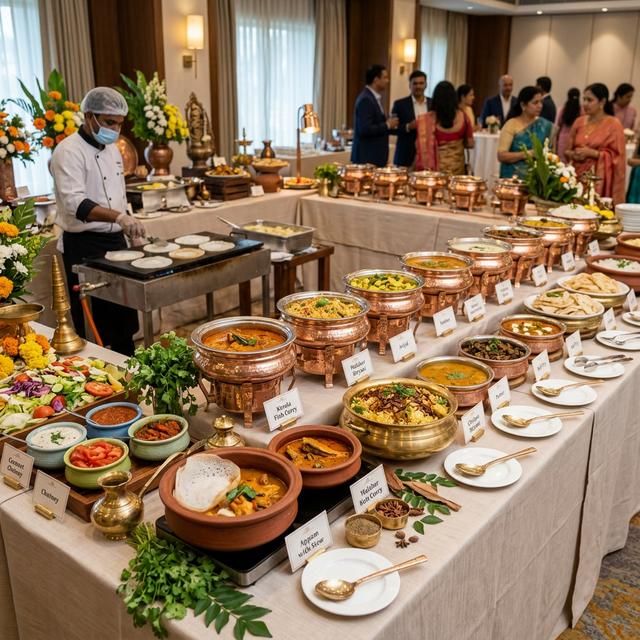
Biryani is the one dish almost every Chennai event buffet builds around, and the chicken-versus-mutton question comes up in nearly every menu planning conversation. Here's how to think about it.
Guest preference usually decides it
Chicken biryani has broader everyday appeal and tends to be the safer default for large, mixed guest lists, including younger guests and first-time biryani eaters. Mutton biryani has a more distinct, richer flavor that food-focused guests specifically look forward to, but it's a stronger taste that not every guest prefers.
Cost and portioning
Mutton typically costs more per portion than chicken, which matters for large guest counts. Many hosts manage this by offering mutton biryani as a smaller "premium counter" alongside a larger chicken biryani counter that covers the bulk of the guest list.
Cooking time and batch planning
Mutton biryani generally needs a longer, slower cook to get the meat tender, which affects how early preparation needs to start relative to serving time. For very large events, this is a scheduling detail worth confirming with your caterer rather than assuming both can be finished on the same timeline.
When to serve both
For weddings and larger receptions, serving both is common — chicken biryani as the main counter, with mutton biryani as a smaller premium option. This gives guests a choice without over-committing the budget to the more expensive option.
Don't forget the vegetarian rice option
Whichever combination you choose, a vegetable biryani or flavored rice counter should sit alongside it, sized to your vegetarian guest count so no one is left with fewer options at the rice counter.
Baruch Caterers prepares both chicken and mutton biryani using traditional slow-cooked methods for weddings, corporate events, and family functions across Chennai. See our full menu to plan your biryani counter.